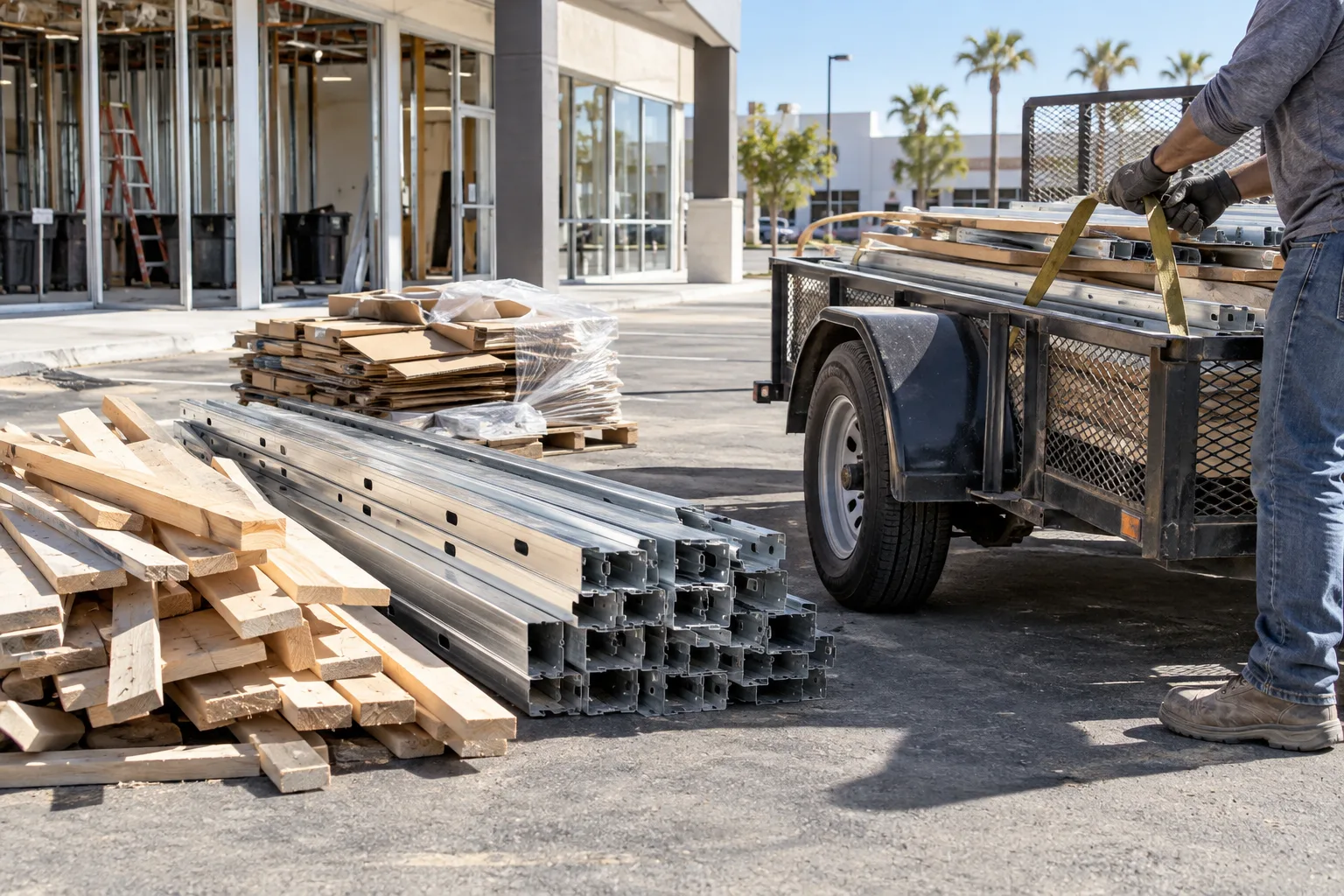
Three visible groups—wood, metal and packaging—tell a hauler more than one mixed heap and make sharp or unusually long pieces easier to spot.
Group by material
Bundle manageable lumber together, stack metal pieces with sharp edges controlled, and flatten clean cardboard. Keep treated or painted wood identified.
Deal with fasteners
Bend, remove or clearly isolate protruding nails only when it can be done safely. Never hide sharp pieces inside opaque bags.
Measure long stock
Note the longest wood or metal piece and whether it can move through gates, corridors and stair turns. Ask before cutting anything that may be structural, energized or connected.
Keep contamination out
Hold paint, solvents, oily rags, batteries, lamps and unknown chemicals for an approved hazardous-waste path. Ordinary construction hauling is not a substitute.
Pickup-readiness checklist
- Wood, metal and packaging separated
- Long pieces measured
- Sharp edges controlled
- Treated wood identified
- Chemicals and batteries removed
Where the rules come from
Kern County Public Works publishes material-specific acceptance criteria for construction and demolition waste, and CalRecycle advises checking local facilities before taking material. Those sources support preparation decisions; they do not confirm what a private hauler will accept.