Clear the debris. Keep the build moving.
Construction debris pickup for Bakersfield remodels, tear-outs and active projects, planned around the material, weight and path to the truck.
 Details before dispatch
 Load-out focused
 Material-aware planning
A cleaner site starts with a better pickup plan.
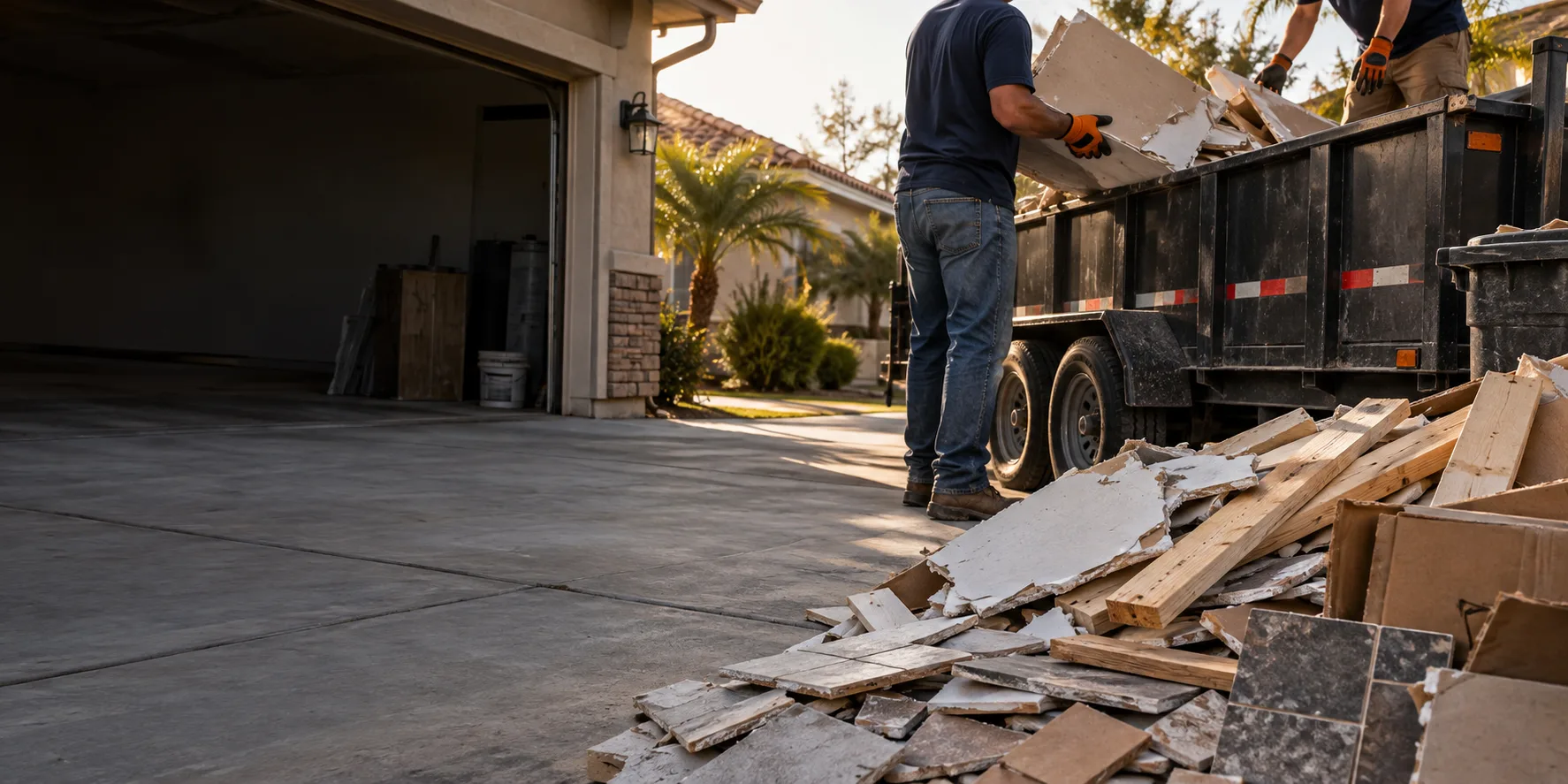
Construction waste is rarely one simple pile. Drywall breaks differently from concrete. Shingles carry weight and loose nails. Cabinets and long trim can block the path before anyone starts loading. DumpMaster organizes the request around those practical details.
Share what the debris is, where it sits and what stands between it and the truck. That creates a more useful estimate conversation and reduces surprises on pickup day.
See every debris service- Material types and rough pile size
- Stairs, gates, elevators or long carries
- Dense material such as concrete or roofing
- Project timing and active-trade access
Six focused cleanup paths
Choose the closest match. Mixed loads can still be reviewed as one project.
Construction Debris Removal
Clear the drywall, lumber, tile, packaging and other non-hazardous jobsite debris that slows the next phase of work.
Drywall Debris Removal
Move cutoffs, broken panels and bagged sweepings out of the work area without mixing them into every other jobsite pile.
Concrete & Masonry Removal
Plan a weight-conscious pickup for broken flatwork, brick, block, stone and tile after a non-structural removal project.
Demolition Debris Cleanup
Remove already-demolished cabinets, flooring, trim, fixtures and mixed tear-out debris so the build can move into its next phase.
Roofing Debris Removal
Clear ground-staged shingles, underlayment and related tear-off debris with weight, nails and surface protection considered up front.
Lumber & Metal Scrap Removal
Move dimensional-lumber offcuts, pallets, metal studs and separated packaging out of the staging area in one planned load-out.
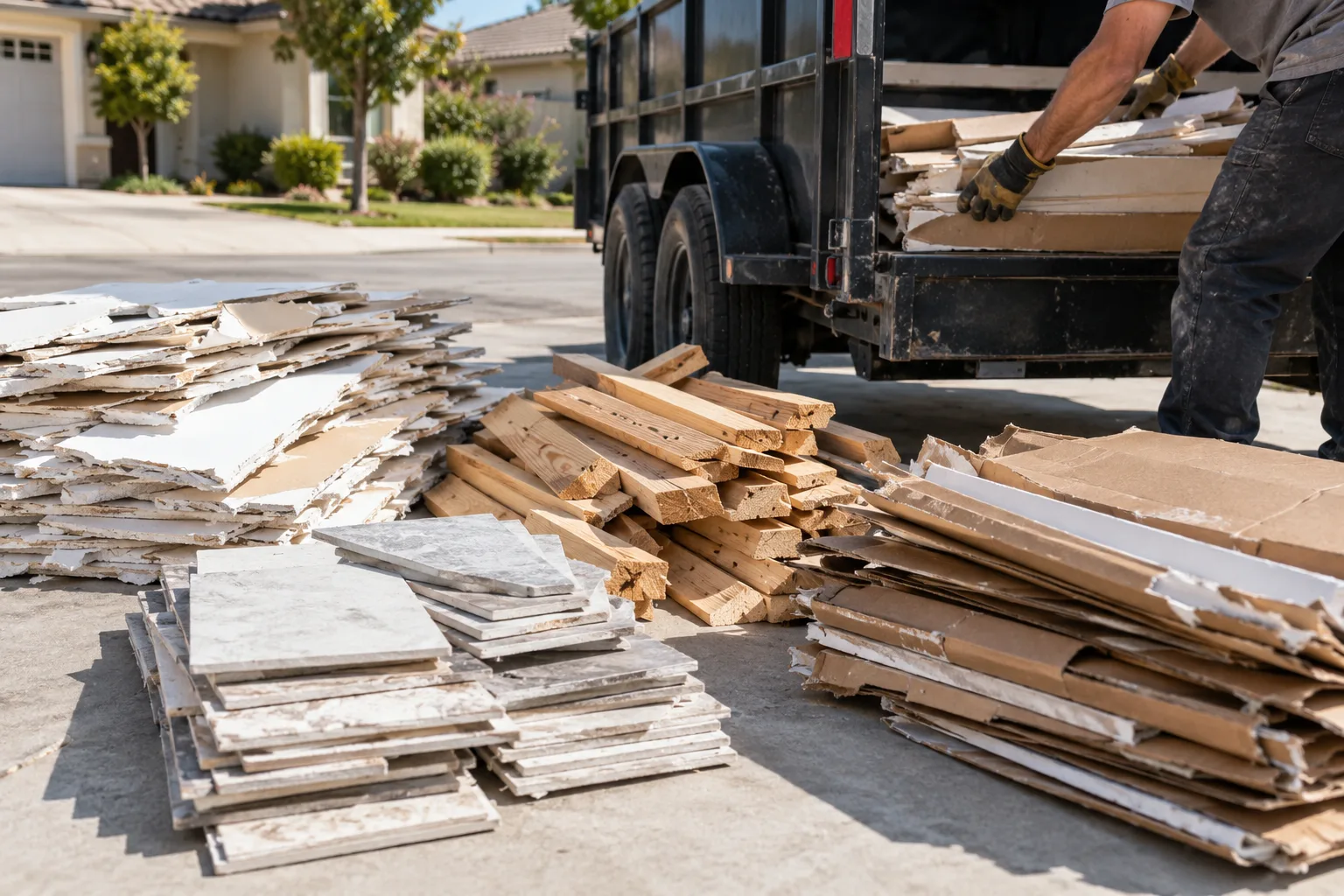
Separate what changes the load.
Kern County Public Works lists asphalt, brick, concrete, dirt, drywall, fencing material, metal, packing material, pallets, pipe and wood among construction and demolition waste categories. Acceptance criteria vary by material and facility, so a pickup plan should keep unusual or regulated items out of the ordinary debris pile.
Paint, solvents, batteries, lamps, fuel, pressurized cylinders, asbestos-containing material and other hazardous or universal waste need an approved handling path.
Use the sorting checklistFrom pile to cleared work area
- DescribeList the debris, pile dimensions, dense materials and anything that needs special review.
- Map accessNote gates, stairs, floor level, loading distance, finished surfaces and truck approach.
- ConfirmAgree on accepted material, scope, price basis and timing before the load-out begins.
Before you call
These are the questions that usually change the loading plan.
What material is not part of a standard pickup?
Hazardous, regulated or uncertain material needs separate review. That includes chemicals, fuels, batteries, lamps, pressurized cylinders and suspect asbestos-containing material.
How is an estimate shaped?
Material, volume, weight, access, loading distance, labor, staging and timing all matter. Dense material can reach a safe vehicle limit before the trailer looks full.
Should everything be mixed together?
No. Keep dense masonry, clean wood, metal, drywall, packaging and questionable material separate when practical. Clear separation makes the load easier to assess.